














African Buffalo — buy or sell


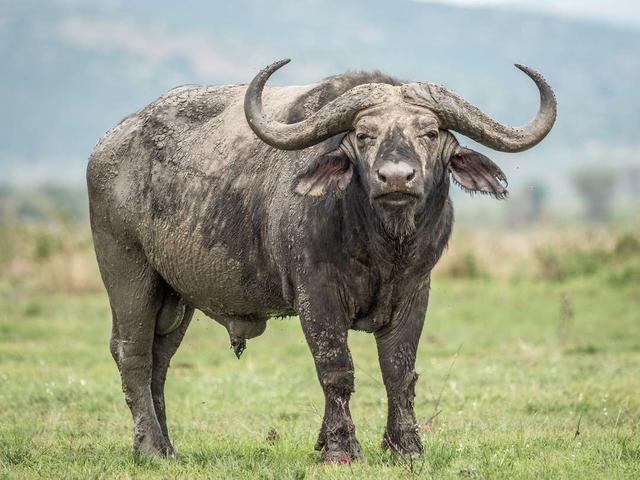
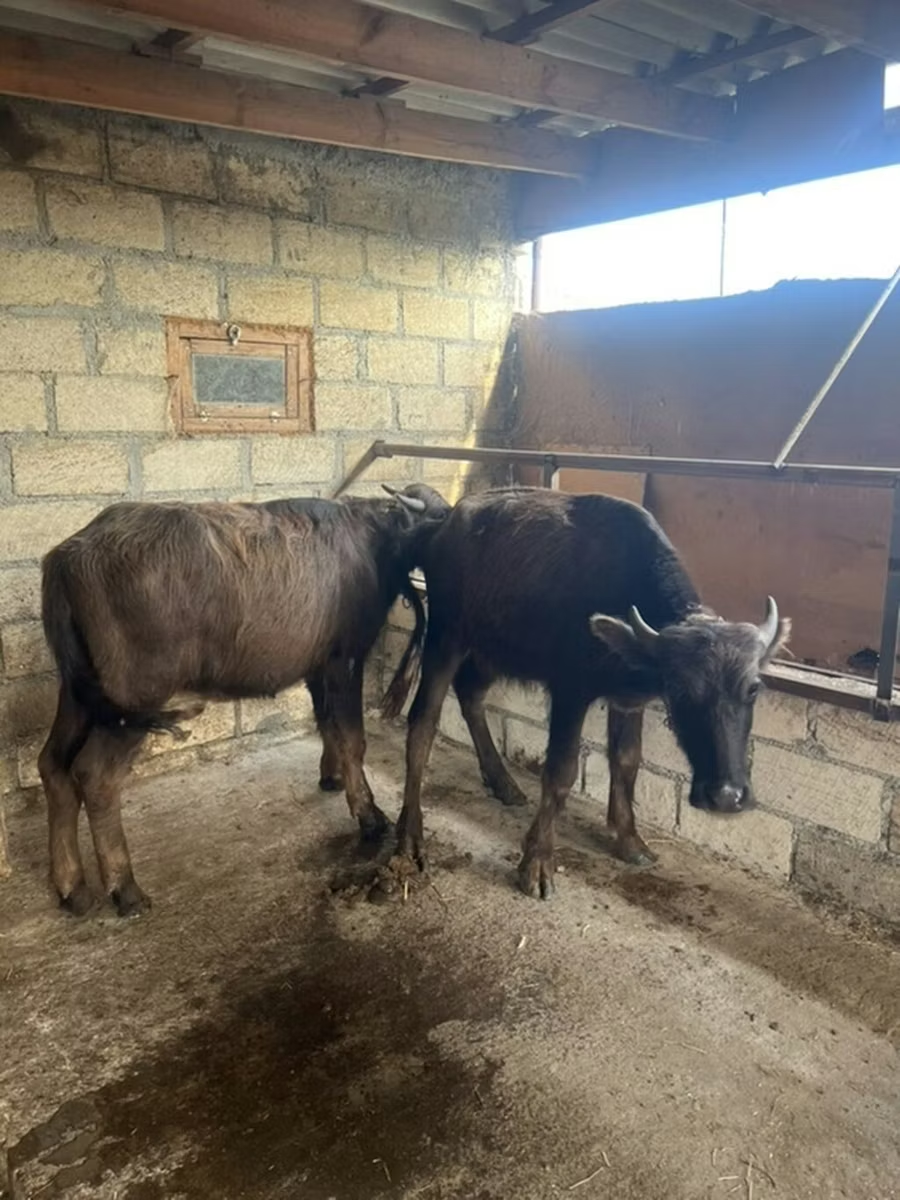
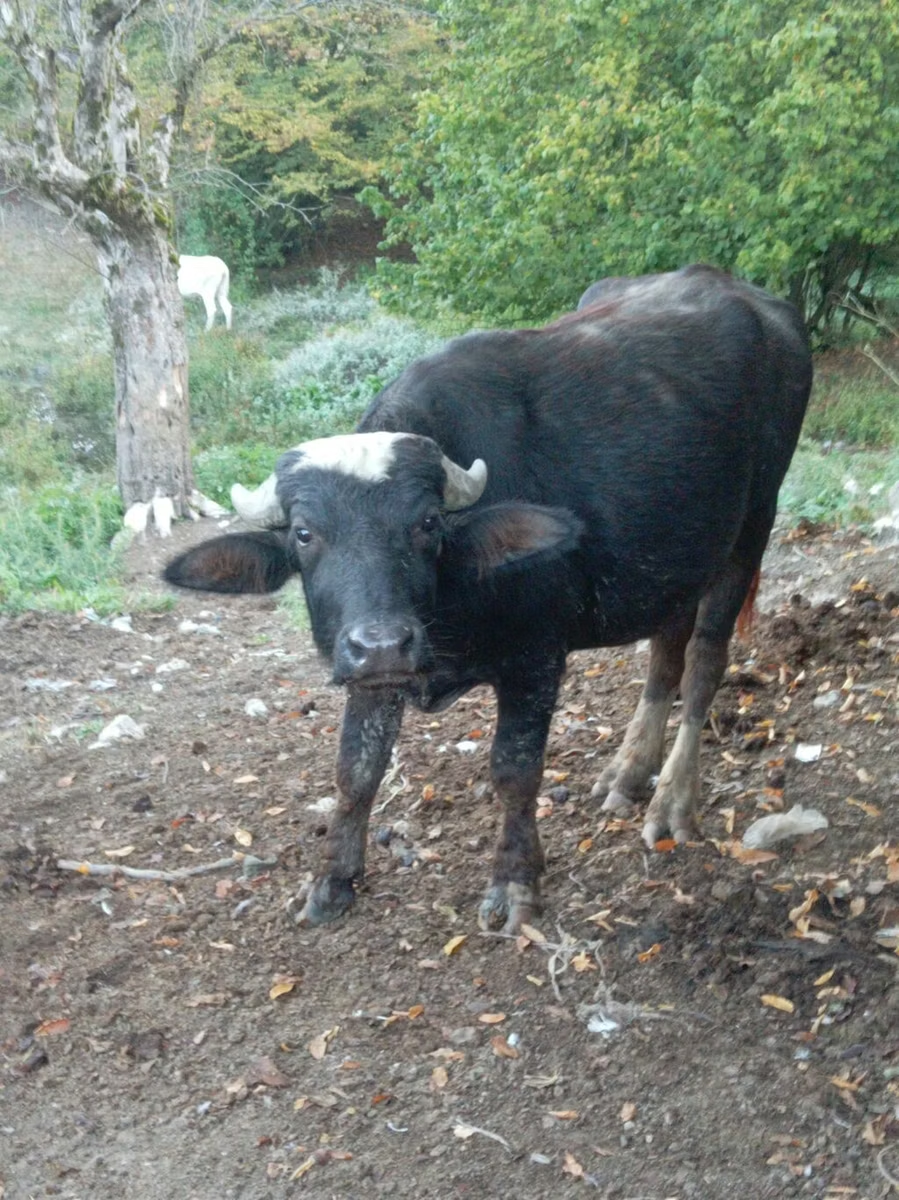
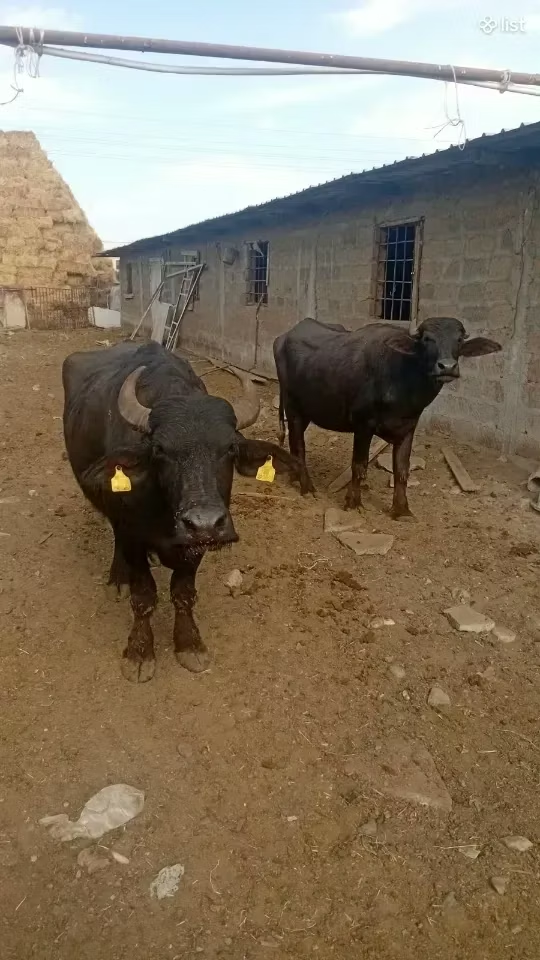
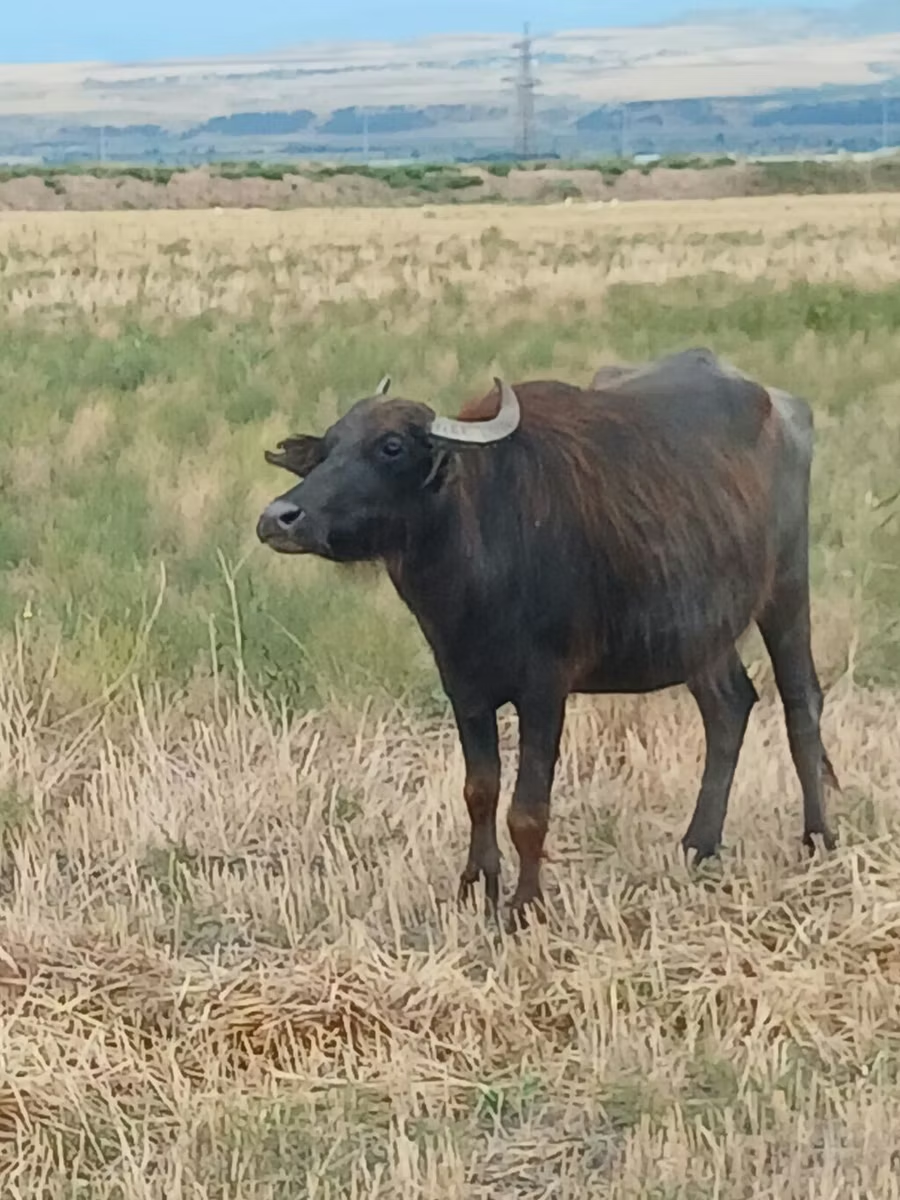
African buffalo, or black buffalo, Cape buffalo, is the only representative of the family Bovidae, widely distributed in Africa. Among the Bovidae family, the African buffalo is classified into a separate genus, Syncerus. The African buffalo is one of the largest buffalo species, with an adult male weighing up to 1000 kg, although individuals weighing 1200 kg can also be found; males are significantly larger than females. The body length can reach 3-3.5 m, and the height at the withers is 1.5-1.8 m. The build is powerful and dense, with a low-set head. The horns are very unusual, with the bases fusing on the forehead to form a distinctive shield, and the tips curve upward and inward. The so-called horn shield on the forehead forms by the age of 5-6 years. The horns of females are much smaller than those of males, and females lack the horn shield. The African buffalo has very poor eyesight but has a well-developed sense of smell and hearing. These animals have a highly developed communication system; tail and head movements play an important role in their interactions, and buffalo also produce various vocal signals. In the 19th century, scientists identified 90 subspecies of buffalo: red buffalo, Cape buffalo, Sudanese buffalo, mountain buffalo, dwarf buffalo, etc. Among the powerful African animals, the African buffalo is the most feared; its only enemy is the lion. Buffaloes are peaceful animals that live in herds with a clear hierarchy, but if disturbed, they can become a dangerous combination of speed, loyalty, and brute strength capable of killing the most formidable animal in Africa—the lion. Exterior. The coat of the African buffalo is dark, black or dark gray in color, with dark and dense hair; as they age, males develop white circles around their eyes, and their hair becomes less dense. Males are significantly larger than females, with an adult male weighing up to 1000 kg, although individuals weighing 1200 kg can also be found. The body length can reach 3-3.5 m, and the height at the withers is 1.5-1.8 m. The build is powerful and dense, with a low-set head; the horns are very unusual, with the bases fusing on the forehead to form a distinctive shield, and the tips curve upward and inward. The mass of the front part of the African buffalo's body is larger than that of the rear, which is why the front hooves are wider than the rear. The African buffalo has wide and large ears and a long tail. The horns of female African buffaloes are much smaller than those of males, and their coloration is lighter.
Log in to learn more
Sign inWhat to feed
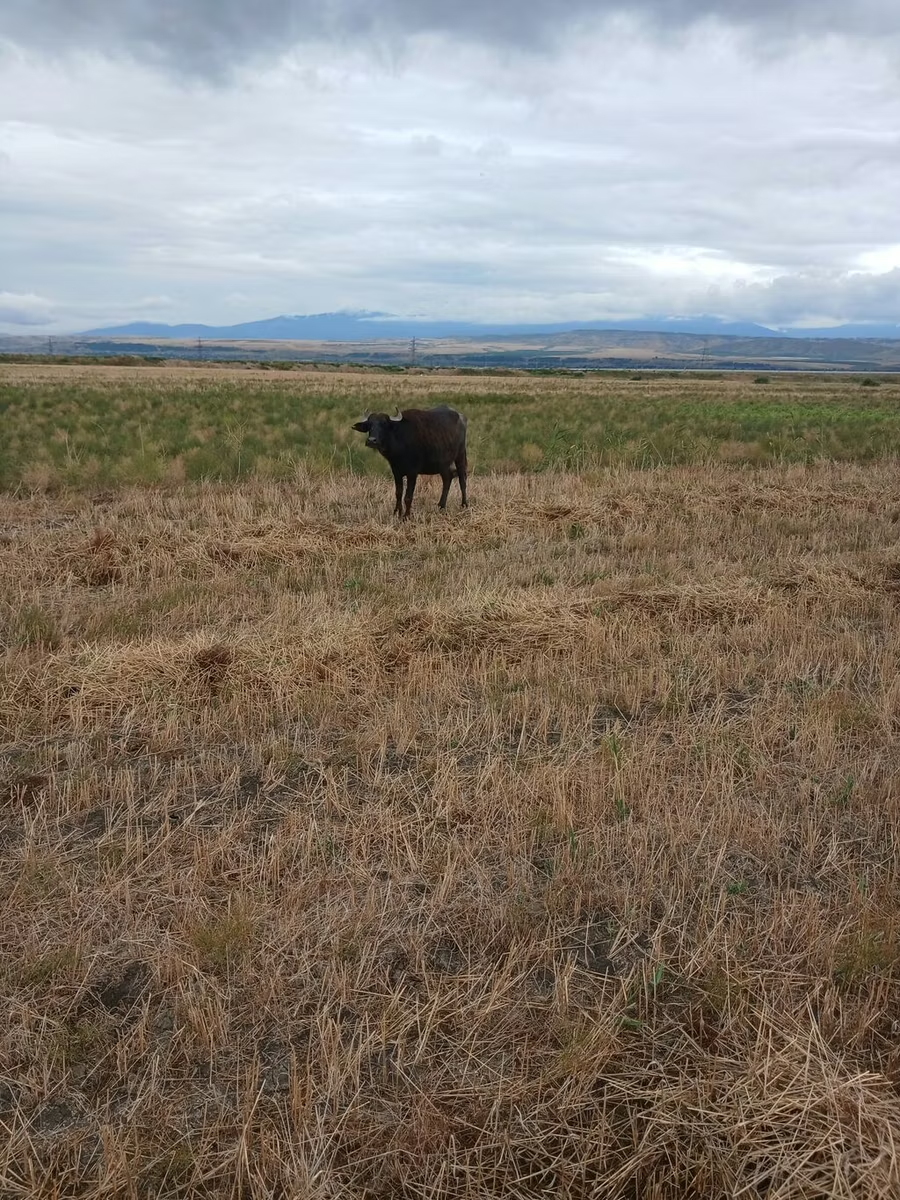
Diet. The African buffalo is a herbivorous animal, very selective in its food, requiring grasses with a high fiber content. It mainly feeds on herbaceous plants, wetland vegetation, shrubs, and reeds. Buffalo consume a large amount of grass, which contributes to weight gain. Buffalo also need water; they do not stray more than 4 km from water bodies. The buffalo suffers greatly if quality green forage is absent. An adult buffalo consumes feed equal to approximately 2% of its own body weight each day.
Physical parameters
Male Weight: 900–1200 kg
Female weight: 500–700 kg
Habitat Range
Angola
Benin
Botswana
Burkina Faso
Burundi
Cameroon
Central African Republic
Chad
Congo - Kinshasa
Ethiopia
Gabon
Ghana
Guinea
Guinea-Bissau
Guyana
Kenya
Liberia
Malawi
Mali
Mozambique
Namibia
Nigeria
Rwanda
Senegal
Sierra Leone
Somalia
South Africa
Sudan
Tanzania
Togo
Uganda
Zambia
Zimbabwe
Frequently Asked Questions
How much does African Buffalo weigh?
Adult animal: male — 900–1200 kg, female — 500–700 kg.
Where does African Buffalo come from?
Country of origin — South Africa.
Where is African Buffalo bred?
The breed is common in: Angola, Benin, Botswana, Burkina Faso, Burundi, Cameroon, Central African Republic, Chad.
What should African Buffalo be fed?
Diet.
Q&A
No questions yet. Ask the first!
Log in to ask a question
Listings in your area