























Maas-Rhine-Issel — 购买或出售


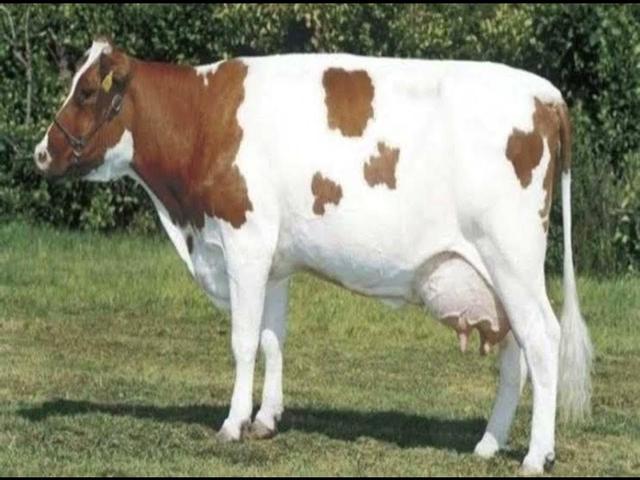
Breed history: The Maas-Rhein-Issel cow (hereinafter MRI) originates from the Netherlands and Germany. The name comes from three rivers – Maas, Rhein, and Issel – that flow through the region where this breed was developed in the second half of the 19th century. The exact details of the conditions of origin are unknown, but it is believed to share common roots with the Dutch Black and White breed. In the early stages of its development, before 1800, various crossbreeding practices were employed, and black coloration predominated. However, at the beginning of the 19th century, selection took two directions: in coastal areas rich in pastures, individuals with black coats were selected to improve milk productivity (which contributed to the emergence of the Black and White Frisian breed), while in the inland areas, where grains and potatoes predominated, red-spotted cows were selected, which formed the Maas-Rhein-Issel breed. In 1874, the first breeding book was published in the Netherlands, and in 1990, the German Breeding Society was established. Initially, the breed had a dual purpose (meat and milk), but over time the focus shifted towards milk production. In the early 1970s, MRI cattle were first imported to the United Kingdom and Ireland, as well as in smaller numbers to Australia, the USA, and Canada. In the Netherlands, the population decreased since the 1970s due to the growing popularity of the Holstein breed. However, thanks to conservation measures, the MRI population recovered, reaching 25,000 heads by 2011. Red-spotted dual-purpose breeds were derived from the Maas-Rhein-Issel breed in Belgium, Luxembourg, France, and Denmark between 1920 and 1950. Exterior: The Maas-Rhein-Issel is a medium-sized breed of cows that stands out for its strong and harmonious build, providing good physical characteristics for both meat and milk production. The typical coloration for this breed is red and white spotted, which gives the animals a distinctive and attractive appearance. Usually, the color is such that the head (which is medium-sized with a prominent forehead) and back are red, while the belly, legs, and area under the tail are predominantly white. White spots may appear on the red head, making the animals' appearance even more recognizable and characteristic of the breed. The body of the Maas-Rhein-Issel is strong, with a wide chest and well-developed musculature, making the breed resilient and hardy.
登录以了解更多
登录喂什么
Diet: The basis of nutrition for Maas-Rhein-Issel cows in summer consists of pasture grasses rich in fiber, vitamins, and minerals. To enhance nutritional value, hay and concentrated feeds are added, which allows for the replenishment of the cows' need for additional proteins and energy substances necessary for full development and maintenance of milk productivity. The winter diet differs significantly, as it is not possible to access fresh pastures during this time of year. In winter, the diet is based on silages, quality hay, silage, and root vegetables. These feeds provide MRI cows with the necessary carbohydrates and fiber, while concentrates added to the diet help meet the energy and protein requirements. This is especially important for cows, as their body load significantly increases during this period due to the drop in ambient temperature. The diet for MRI cows during pregnancy requires special attention. At this time, it should include additional calories and an increased amount of vitamins and minerals to support the health of both the cow and the developing fetus. Such supplementation includes high-quality concentrates that provide the animal with proteins, B vitamins, as well as calcium and phosphorus necessary for the proper development of the bones and tissues of the future calf. In the early stages of life, MRI calves receive nutrients through maternal milk, which is then gradually supplemented with quality hay, concentrated feeds, and special feeds for young stock. These supplements provide the young animals with the necessary elements for healthy growth and immune strengthening, and later prepare the calves for adult food.
物理参数
雄性体重: 900–1250 公斤
雌性体重: 650–900 公斤
雄性身高: 138–148 厘米
雌性身高: 135–140 厘米
栖息地
丹麦
卢森堡
德国
新西兰
比利时
澳大利亚
美国
英国
荷兰
常见问题
Maas-Rhine-Issel有多重?
成年动物:公牛 — 900–1250 公斤, 母牛 — 650–900 公斤。
Maas-Rhine-Issel有多高?
肩高:公牛 — 138–148 厘米, 母牛 — 135–140 厘米。
Maas-Rhine-Issel起源于哪里?
原产国 — 荷兰。
Maas-Rhine-Issel在哪里饲养?
该品种分布于:丹麦, 卢森堡, 德国, 新西兰, 比利时, 澳大利亚, 美国, 英国。
Maas-Rhine-Issel吃什么?
Diet: The basis of nutrition for Maas-Rhein-Issel cows in summer consists of pasture grasses rich in fiber, vitamins, and minerals.
问答
还没有问题。第一个提问!
登录 以提问