


















Ayrshire — buy or sell


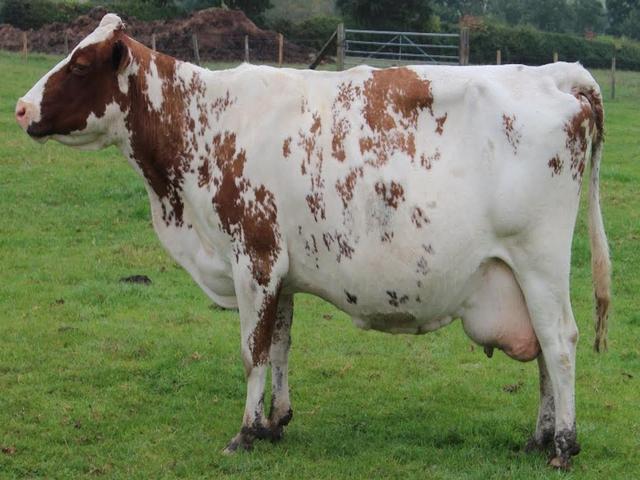
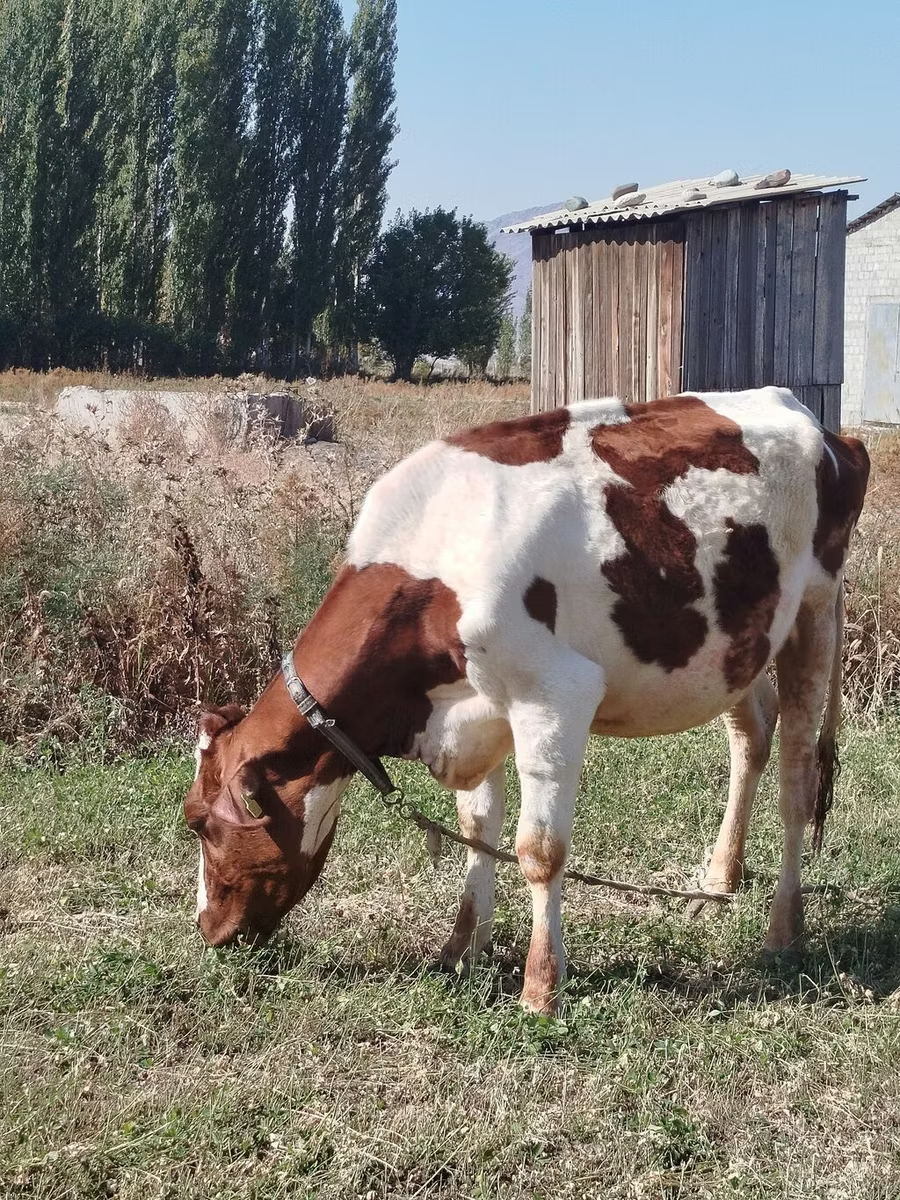
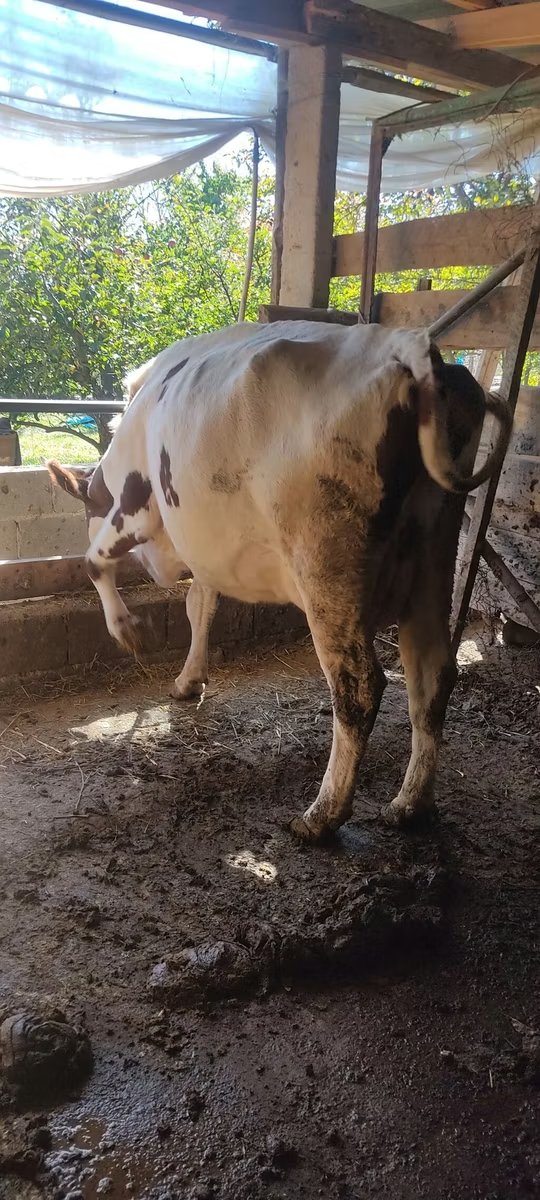
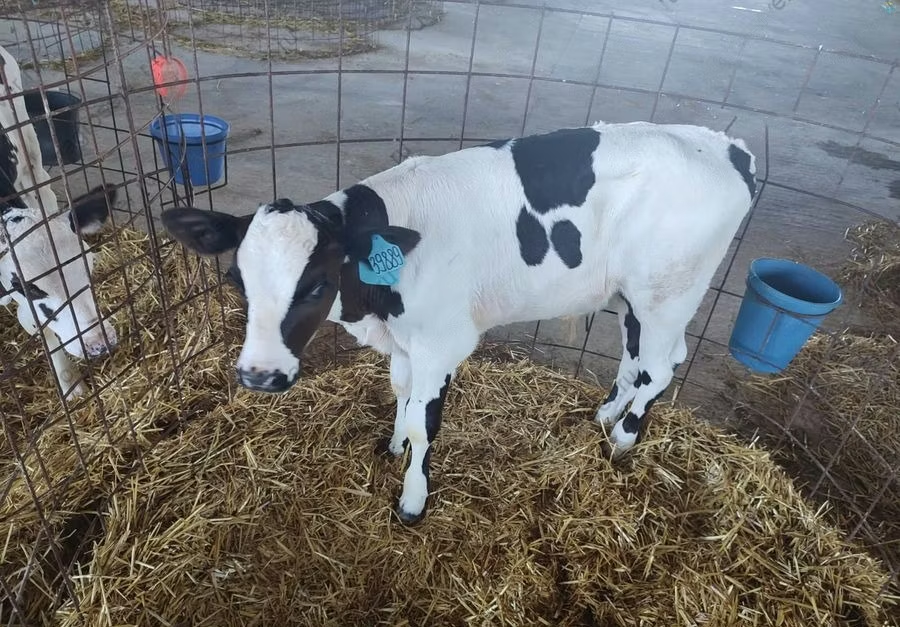
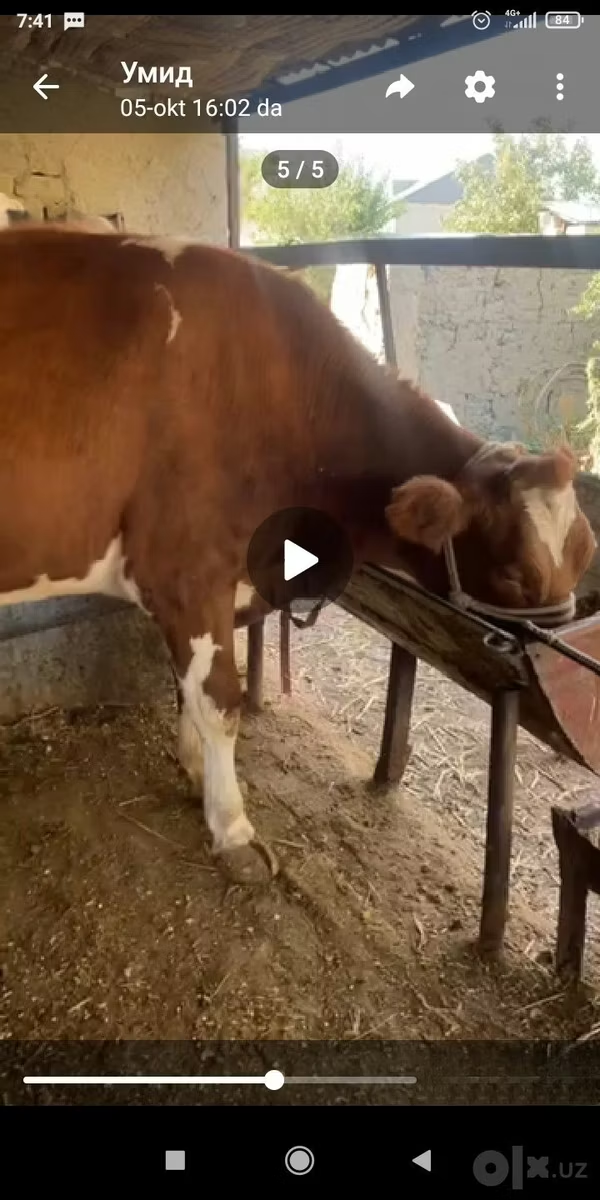
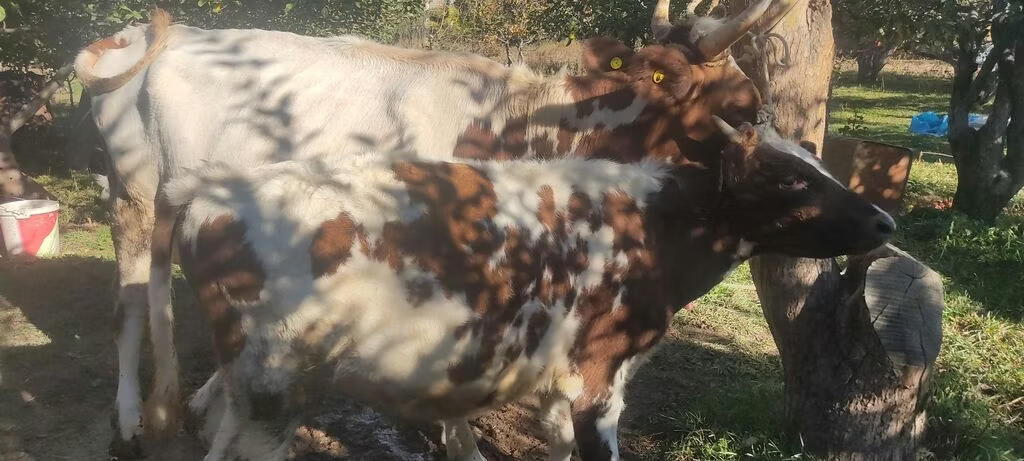
History of the breed. Ayrshire cows are magnificent animals whose coat is characterized by a mottled coloration, including various shades of brown and reddish colors, which stand out particularly well on lighter areas. Often, the red color predominates in the coat of these cows, which may be interspersed with white spots. Ayrshire cows, originating from Scotland in Ayrshire County, represent a breed that was developed in the late 18th century by crossing local heifers with Dutch, Teeswater, and Alderney bulls. The goal of this process was to create a breed with high productivity. The idea proved successful, and by the mid-19th century, Ayrshire cows became popular. In 1845, the breed was introduced to Finland, where it was discovered to have a unique feature—excellent resistance to cold climates. This quality made Ayrshire cows particularly valuable, and today a large portion of the modern population of this breed is found in Finland, where there are about 140,000 head. Exterior. Ayrshire cows are compact in size: their height at the withers is approximately 125 cm, and their weight is around 450 kg. Bulls are larger, with a mass that can reach 700–800 kg. These animals have a harmonious build: a long and deep body, a straight and wide back, a narrow chest, and a brisket. The head is proportional to the body, with a wide muzzle. The legs are short but straight and strong. Ayrshire cows have strong hooves and well-developed musculature, allowing them to feel comfortable not only on plains but also in mountainous conditions. The rump of the cows is long and wide, especially in the area of the hooks and the ischial tuberosities. The udder is cup-shaped, elastic, and smooth, with a dense network of blood vessels. The teats are evenly developed, wide, conical or cylindrical in shape, and about 6 cm long. Housing conditions. These cows easily adapt to different housing conditions. In pastures, they independently find succulent feed. Recently, the Ayrshire breed has become increasingly sought after in organic livestock systems. It is particularly well-suited for the northern and eastern regions of the country, where the animals easily endure winter in unheated facilities. The main requirement is that the facility has good ventilation, water that does not freeze, and a thick layer of bedding. In some farms, Ayrshire cattle are kept under shelters year-round.
Log in to learn more
Sign inWhat to feed
Diet. In the summer, cows are fed fresh grass, which they receive in the pasture. In winter, their diet consists of hay enriched with vitamins and minerals. Ayrshires easily adapt to seasonal changes in nutrition. Even with a sparse diet, their milk yield does not decrease, but the quality of the milk may decline. The diet of cows consists of three parts: The main part includes hay, husks, straw, chaff, and bran in various proportions. The balancing feed consists of wheat, oats, cake, meal, and soybean meal. The combined feed consists of concentrates given in amounts of up to 3–4 kg per day. Fruits and vegetables are added to the diet as sources of vitamins: beets, carrots, cabbage, tops, and pumpkin. Potatoes and concentrates with high starch content can negatively affect milk quality. A small amount of silage and haylage is given, but ground chalk is added in the amount of 30–40 g.
Physical parameters
Male Weight: 700–800 kg
Female weight: 400–450 kg
Male height: 110–135 cm
Female height: 110–135 cm
Habitat Range
Afghanistan
Albania
Algeria
American Samoa
Andorra
Angola
Anguilla
Antigua & Barbuda
Argentina
Armenia
Aruba
Australia
Austria
Azerbaijan
Bahamas
Bahrain
Bangladesh
Barbados
Belarus
Belgium
Belize
Benin
Bermuda
Bhutan
Bolivia
Bosnia & Herzegovina
Botswana
Brazil
British Virgin Islands
Brunei
Bulgaria
Burkina Faso
Burundi
Cambodia
Cameroon
Canada
Cape Verde
Caribbean Netherlands
Cayman Islands
Central African Republic
Chad
Chile
China
Colombia
Comoros
Congo - Brazzaville
Congo - Kinshasa
Cook Islands
Costa Rica
Croatia
Cuba
Curaçao
Cyprus
Czechia
Côte d’Ivoire
Denmark
Djibouti
Dominica
Dominican Republic
Ecuador
Egypt
El Salvador
Equatorial Guinea
Estonia
Eswatini
Ethiopia
Faroe Islands
Fiji
Finland
France
French Guiana
French Polynesia
Gabon
Gambia
Georgia
Germany
Ghana
Gibraltar
Greece
Greenland
Grenada
Guadeloupe
Guam
Guatemala
Guernsey
Guinea
Guinea-Bissau
Guyana
Haiti
Honduras
Hong Kong SAR China
Hungary
Iceland
India
Indonesia
Iran
Iraq
Ireland
Isle of Man
Israel
Italy
Jamaica
Japan
Jersey
Jordan
Kazakhstan
Kenya
Kiribati
Kosovo
Kuwait
Kyrgyzstan
Laos
Latvia
Lebanon
Lesotho
Liberia
Libya
Liechtenstein
Lithuania
Luxembourg
Macao SAR China
Madagascar
Malawi
Malaysia
Maldives
Mali
Malta
Marshall Islands
Martinique
Mauritania
Mauritius
Mayotte
Mexico
Micronesia
Moldova
Monaco
Mongolia
Montenegro
Morocco
Mozambique
Myanmar (Burma)
Namibia
Nauru
Nepal
Netherlands
New Caledonia
New Zealand
Nicaragua
Niger
Nigeria
North Korea
North Macedonia
Northern Mariana Islands
Norway
Oman
Pakistan
Palau
Palestinian Territories
Panama
Papua New Guinea
Paraguay
Peru
Philippines
Poland
Portugal
Puerto Rico
Qatar
Romania
Russia
Rwanda
Réunion
Samoa
San Marino
Saudi Arabia
Senegal
Serbia
Seychelles
Sierra Leone
Singapore
Sint Maarten
Slovakia
Slovenia
Solomon Islands
Somalia
South Africa
South Korea
South Sudan
Spain
Sri Lanka
St. Kitts & Nevis
St. Lucia
St. Martin
St. Vincent & Grenadines
Sudan
Suriname
Sweden
Switzerland
Syria
São Tomé & Príncipe
Taiwan
Tajikistan
Tanzania
Thailand
Timor-Leste
Togo
Tonga
Trinidad & Tobago
Tunisia
Turkmenistan
Turks & Caicos Islands
Tuvalu
Türkiye
U.S. Virgin Islands
Uganda
Ukraine
United Arab Emirates
United Kingdom
United States
Uruguay
Uzbekistan
Vanuatu
Venezuela
Vietnam
Wallis & Futuna
Western Sahara
Yemen
Zambia
Zimbabwe
Åland Islands
Frequently Asked Questions
How much does Ayrshire weigh?
Adult animal: male — 700–800 kg, female — 400–450 kg.
How tall is Ayrshire?
Height at the withers: male — 110–135 cm, female — 110–135 cm.
Where does Ayrshire come from?
Country of origin — United Kingdom.
Where is Ayrshire bred?
The breed is common in: Afghanistan, Albania, Algeria, American Samoa, Andorra, Angola, Anguilla, Antigua & Barbuda.
What should Ayrshire be fed?
Diet.
Q&A
No questions yet. Ask the first!
Log in to ask a question
Listings in your area