





























Wagyu — 购买或出售



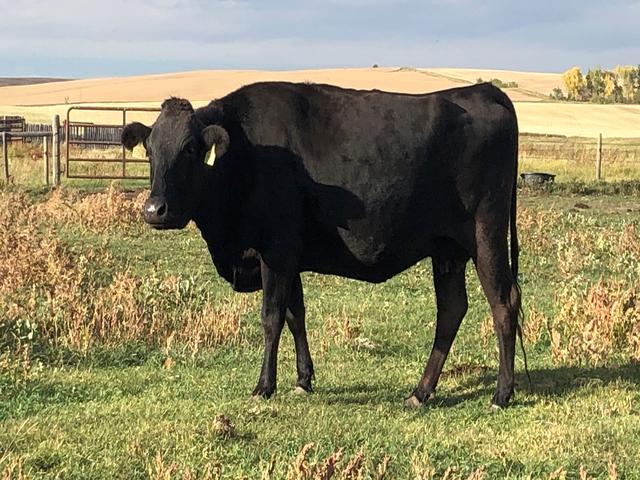
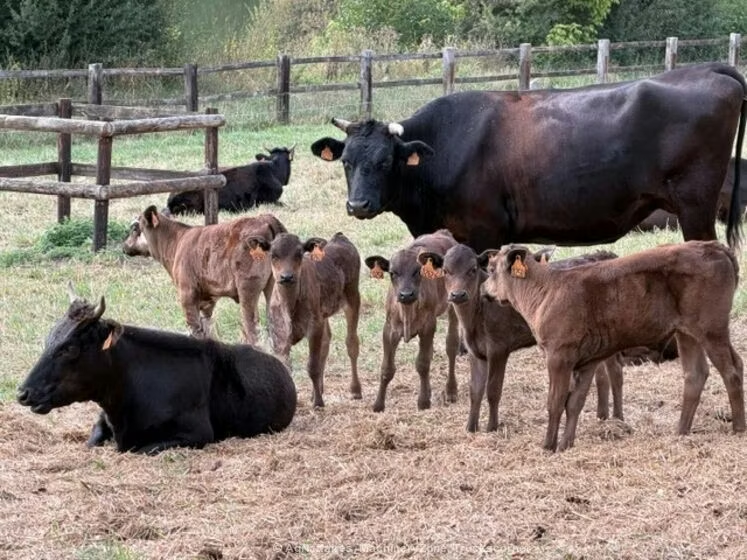
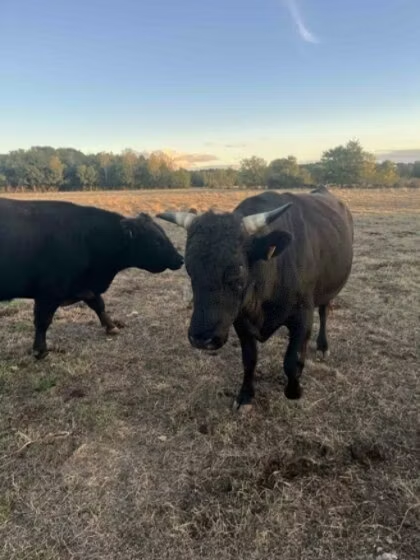
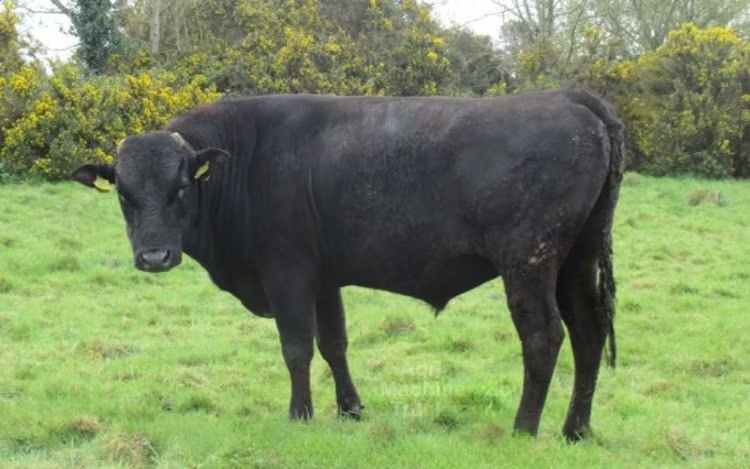
Breed history: Wagyu is a collective name for a breed (or rather, a group of breeds) of cattle from Japan, which boasts an ancient and rich history. Its roots go back centuries to ancient Japan. Genetic studies show that this line of cattle began to form as far back as 35,000 years ago. Modern Wagyu is the result of crossbreeding local Japanese cattle with imported breeds. This process began in 1868, after the Meiji Restoration. At that time, the Japanese government sought to introduce Western dietary habits, and various breeds of cows were imported into the country: Brown Swiss, Devon, Shorthorn, Simmental, Ayrshire, and Korean. In 1910, the import of genetic material was halted, and breeding "in itself" began. This means that crossbreeding occurred only within the Wagyu breed, without the involvement of other breeds. As a result of geographical isolation, three main black lines of Wagyu developed in Japan: Tajiri (or Tajima), Fujiyoshi (Shimane), and Kedaka (Tottori). This led to a great diversity within the breed, surpassing even the variations among British and European breeds. In 1975, two black and two red Wagyu bulls were imported to the USA. This marked the beginning of the breed's history in America. Today, Wagyu is one of the most famous and valuable beef breeds in the world. Exterior: Wagyu is not a single breed but several breeds of cattle developed in Japan. These include Japanese Black, Japanese Brown (known as Red in the USA), Japanese Polled, and Japanese Shorthorn. Each of these breeds has its own characteristics, but they all share one thing in common — high meat quality. Wagyu are not small in weight. Adult bulls weigh 900-1000 kg. Cows are slightly smaller, weighing 500-600 kg. The height at the withers for bulls is 130-140 cm, while for cows it is 120-130 cm. The horns of Wagyu can be straight or slightly curved forward. The coat color of Wagyu can be black or red, depending on the specific breed. Housing conditions: Wagyu cows can live and reproduce in both hot and cold regions. This makes them versatile and allows them to be raised in almost any part of the world. In Japan, where grazing space is limited, farmers massage the cows to relieve stress and muscle stiffness. This helps maintain the health and well-being of the animals, even if they cannot move freely.
登录以了解更多
登录喂什么
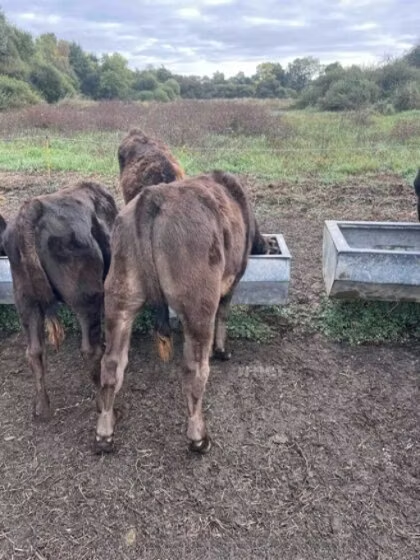
Diet: The secret of Wagyu marble meat lies not only in genetics but also in the specifics of feeding and management. After birth, Wagyu calves are fed with their mother's milk for six months. This provides them with all the necessary nutrients for healthy growth and development. Then, the calves are released to pastures where they can move freely and feed on fresh grass. This stage is important for their physical development and the formation of a strong immune system. Later, the bulls are separated from their mothers and switched to a special diet consisting of high-quality grain. This allows them to gain weight quickly and develop the marbling of the meat, which is highly valued by gourmets. To increase the marbling of the meat, the bulls are restricted in movement. This is done so that the fat is evenly distributed in the muscle tissue, forming the characteristic marbled pattern. The fat content of the meat is achieved through grains.
物理参数
雄性体重: 900–1000 公斤
雌性体重: 500–600 公斤
雄性身高: 130–140 厘米
雌性身高: 120–130 厘米
栖息地
德国
新西兰
日本
智利
澳大利亚
美国
韩国
常见问题
Wagyu有多重?
成年动物:公牛 — 900–1000 公斤, 母牛 — 500–600 公斤。
Wagyu有多高?
肩高:公牛 — 130–140 厘米, 母牛 — 120–130 厘米。
Wagyu起源于哪里?
原产国 — 日本。
Wagyu在哪里饲养?
该品种分布于:德国, 新西兰, 日本, 智利, 澳大利亚, 美国, 韩国。
Wagyu吃什么?
Diet: The secret of Wagyu marble meat lies not only in genetics but also in the specifics of feeding and management.
问答
还没有问题。第一个提问!
登录 以提问
您所在地区的分类信息